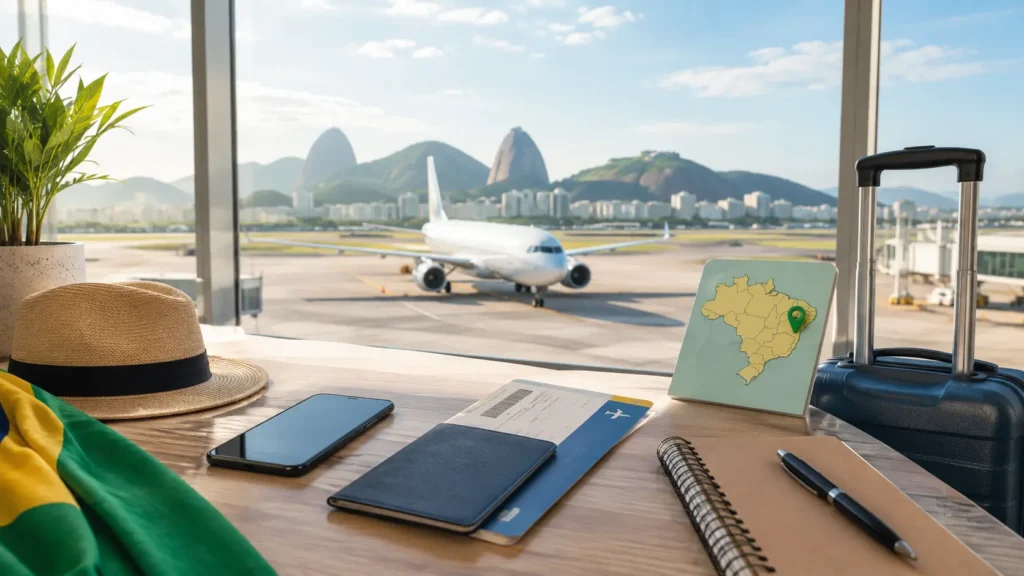
Brazil is a continental sized country, and that changes how you should plan any trip here. Its total area comes close to the size of all of Europe, see this size comparison for scale. Keep that in mind before you map out your route.
Many travelers underestimate the distances between destinations here. A trip that looks short on a map can easily eat up a full day of travel. This guide breaks down the transportation options you will actually use as a tourist.
The Best Way to Get Around Brazil
The truth is that there is no single best way to get around Brazil. There are many transportation options here, and each one fits a different kind of trip. The right choice depends on where you are going and how much time you have.
As a native, my best tip is to plan your routes ahead of time. If your trip includes more than one city or state, work out how you will move between them before you leave, as we will show below.
Otherwise, you can lose a lot of your trip just trying to decide the right option.
9 Good Options to Get Around Brazil

Brazil offers a wide mix of transportation, from planes to boats to ride-hailing apps. Below are the options you are most likely to use as a tourist, broken down by situation.
Some work best between states, others are built for getting around inside a single city.
1. Airplane
Flying is usually the best choice for trips between cities in different states. To put the distances into perspective, just crossing Bahia, one single state in Brazil’s Northeast, can take more than 15 hours by road. Spending your whole trip crossing states by land is probably not what you had in mind.
Brazil has a solid network of domestic airlines, including Gol, LATAM, and Azul. Their routes connect the country’s major hubs and most tourist destinations well.
We have a full guide dedicated to this topic here: Domestic Flights in Brazil.
2. Bus
For cities within the same state, buses are usually a good option, even over long distances. For towns further inland, you may need a connecting bus, which can make the trip more tiring. Always compare the bus route against a flight before deciding.
Brazil is so large that each state tends to have its own regional bus operators. Some of the most common intercity companies include:
- Viação Águia Branca.
- Viação Cometa.
- Viação 1001.
- Gontijo.
- Expresso Guanabara.
Coverage varies by region, so it is worth checking which company actually runs the route you need.
Buses inside cities matter just as much for your planning. Before you go, look up the local bus network, including the routes and schedules for the lines you will use.
Most tourist cities with over 100,000 residents have a reliable bus system, and it tends to be a very affordable option.
3. Metro
The metro is an excellent option inside big cities. Rio de Janeiro and São Paulo, for example, have tourist attractions spread far apart, and the metro gets you there quickly. It also skips street traffic entirely, which matters a lot in cities this size.
Payment is simple too, you just tap a card at the turnstile and go. Both the metro and city buses tend to get crowded during rush hour, especially early morning and late afternoon. It is worth checking your line’s schedule ahead of time if you want to avoid the busiest hours.
4. Ride-Hailing Apps
Apps like Uber and 99, a popular local alternative, are extremely common in Brazil, and prices are usually reasonable. The main thing to pay attention to is safety. I always check the driver’s rating before accepting a ride, and I have never had an issue doing it this way.
Ride-hailing is also a great choice for getting to and from the airport. It works especially well if you do not already have a transfer arranged.
5. Ferries and Boats
In coastal towns and on islands, like Morro de São Paulo and parts of Porto Seguro, boats and ferries are simply part of daily life.
In most cases, you can just show up at the pier and buy your ticket on the spot. No advance planning is usually needed for these short local crossings.
6. Guided Vans and Day Tours
Many destinations offer organized day trips using a private van with a local guide. This is a convenient option if you want to see several stops in one day without worrying about logistics. It also works well for attractions that are harder to reach on your own.
7. Taxis
Taxis are still widely available across Brazilian cities, especially near hotels, airports, and bus stations. They make a reliable backup when app-based rides are scarce or slow to arrive. Just confirm the fare, or make sure the meter is running, before you set off.
8. Corcovado Train and Cable Cars
Some attractions require a specific type of transport built just for that spot. To reach Christ the Redeemer in Rio de Janeiro, you take the Corcovado Train, a cogwheel train that climbs through Tijuca National Park, or an official van.
For Sugarloaf Mountain, the cable car, known locally as the “bondinho”, takes you up in two stages with panoramic views the whole way. Both rides are attractions in their own right, so book your tickets ahead of time whenever you can.
9. Renting a Car
Renting a car gives you the most freedom, especially for road trips along the coast or through inland regions like Chapada Diamantina. It also makes sense in areas where public transportation is limited.
Just remember that road conditions and driving styles vary a lot between regions, so drive with extra caution outside cities you already know.
Conclusion
Brazil is a huge country, but that does not mean you will run out of ways to get around. Map out your options ahead of time, pick what fits each leg of your trip, and enjoy the journey.
Check out other guides on our Blog to keep planning the rest of your trip to Brazil.