
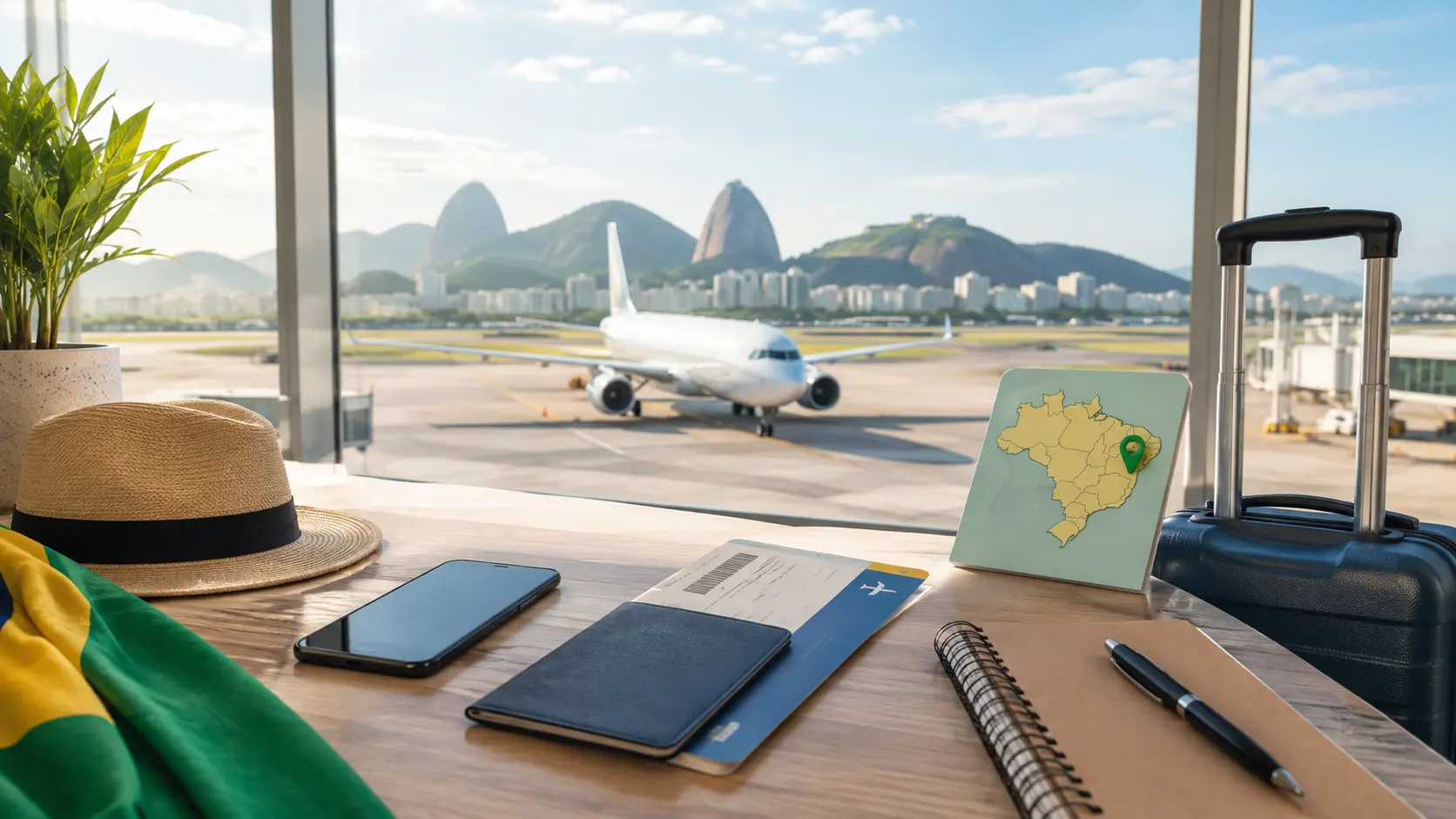
Brazil is too vast to see by road alone, and for most travelers, flying domestic is the only realistic way to connect its regions. A bus from Rio to the Amazon can eat up two full days, while a flight covers the same distance in a few hours.
This guide breaks down the airlines that run the country, what to expect at the airport, and how locals actually shop for cheaper fares.
The 3 Main Airlines in Brazil
Almost every domestic route in Brazil is covered by one of three carriers, and each one has its own personality once you’ve flown it a few times.
- Latam: the largest network in the country, the most international connections, and part of the Oneworld alliance;
- Gol: strong short-haul coverage and one of the most reliable schedules in Brazilian aviation;
- Azul: the newest of the three, known for reaching smaller cities the other two often skip.
Which one is actually the best? As a native who has flown all three more times than I can count, each one earns its reputation. Azul usually wins on in-flight service, with warmer crews and small touches that make a longer flight easier.
Gol has never let me down on punctuality, flights tend to leave and land almost exactly when the schedule says. Latam consistently delivers excellent service from its flight attendants, especially on the longer domestic routes.
So whichever one you end up booking, you can trust the airline and fly with peace of mind.
What You Need to Fly Domestically in Brazil
A valid passport is enough for foreign visitors on any domestic leg, since there’s no separate ID requirement once you’ve entered the country legally. Just make sure the name on your ticket matches your passport exactly.
Arrive with time to spare even for a domestic flight, since check-in and bag drop typically close 30 to 60 minutes before departure. Basic fares on all three airlines often include carry-on only, so check the fine print before you pack.
Security lines can run long at busier hubs like São Paulo’s Guarulhos and Congonhas, especially during peak travel times. If you’re flying into the Amazon or Pantanal during the rainy season, build in some buffer, since weather delays are common there.
Tips Before You Buy Your Plane Ticket

Google Flights is just as popular here as it is abroad, and it’s a solid way to track price history and catch a fare drop before it disappears. Set an alert on your route a few weeks out and let it do the watching for you.
All three airlines run their own loyalty programs, Smiles for Gol, TudoAzul for Azul, and Latam Pass for Latam. If you’re short on points, every program lets you buy miles directly, which can work out cheaper than paying full price in cash.
Travel agencies in Brazil also bundle domestic flights into full trip packages, pairing the ticket with hotels or tours. It’s worth pricing that out against booking everything separately, since the savings can go either way depending on the route.
A few more things I always tell people flying here for the first time: download each airline’s app before your trip, since gate changes get pushed there faster than announced at the airport.
Last, flights around Carnaval and New Year’s sell out early and get pricier fast, so book those dates well ahead. And keep a digital and printed copy of your ticket, since not every regional airport has smooth wifi for pulling one up on the spot.
____________________
In summarize, domestic flying in Brazil is easy once you know which airline fits your trip and how to time the purchase. Booking a few weeks ahead, comparing loyalty programs, and staying flexible on dates will save you real money over the course of a trip.
Planning the rest of your route? Check out more guides on our Blog for tips on getting around once you land.